Greece and EUsury

Screenshot 2015-02-22 14.15.10Picture this: You’re in deep financial trouble, so you ask a comfortably-off friend if they can lend you £1000 for a while. They say yes, but the loan will be at 5% interest, compound, and if you haven’t paid it off by a certain date, they will take possession of enough of your stuff to compensate them. That would be the end of the friendship. It would be glaringly obvious that your so-called friend was not helping you but taking advantage of your weakness. It’s one thing to pay back the £1000, quite another to pay any more than that. (You might buy them a little present or give them a treat when you’d done so, just to show you appreciated their help, but if you simply gave them some extra money, that would embarrass any true friend.)

Lending at interest, especially high rates of interest, is properly called ‘usury’. Usury refers to a relationship between strong and weak, in which the strong (the lender) expects not just repayment of a loan, but interest on top of it. Usury has been around for millennia, and reviled for allowing the rich to free-ride on the labour of others; at various times it’s been banned by some religions, mainly for this reason. The story of the borrower getting deeper in debt, having to work for the lender, or give up their property, or being thrown in a debtors’ prison is an old one, but modern usury operates in more impersonal but no less exploitative forms. The usurer benefits from the borrower remaining in debt, as long as they keep paying them interest. The net flow of money is from borrower to lender, not the reverse. In these circumstances, it’s the lender not the borrower, who gets the free-ride.

So it’s strange how we are told that debtors should repay their debts as if that were only fair. It is if it’s just a matter of returning the principal (plus administration costs and interest to cover inflation), then OK, but anything above that is unearned income for the lender. Even then, we need to check to see if the pre-existing situation under which the borrower came to seek the loan was fair, or if the creditor was helping or hindering them in becoming more economically sustainable.

Modern usurers and their apologists defend interest charges as compensation for taking a

Photo: Alopoudis Dimitris, Creative Commons

Photo: Alopoudis Dimitris, Creative Commons

risk, but as we see in the Greek debt crisis, when the risk turns bad, the lenders can’t stomach taking a loss, and try to push the risk onto the debtor, or onto the public, as in the case of bank bailouts. And they usually have the political clout to do so. If interest is a payment for risk, then either the lender shares in that risk or it is money for nothing. For the lenders, these debts are ‘assets’ – sources of future income – and many have banked on getting the payments.(1) So the lenders are being bailed out. 92% of the €252 billion from the Troika (IMF, ECB and EU) that Greece received went to bailing out private lenders; only the remainder went to the Greek people. Sure, earlier Greek governments ‘agreed’ to the contracts, but they did so over the heads of the Greek people, and increasingly they have to negotiate under duress. Usury is precisely a relationship between unequals in which the borrower has fewer options than the lender.

The usurers don’t just want their loans and interest repaid, they want the borrowers’ property, and the debt is a useful stick to beat them with to get it. In classic neoliberal style, they demand privatizations – sell-offs of key state assets, particularly those that can provide rent for the owner. Before Syriza took power and stopped it, a body called the Hellenic Republic Asset Development Fund was busy selling off Greek assets from resorts, ports, marinas, golf courses, regional airports, government buildings (sale and leaseback), to rail transport, water supply, roads and energy. As it says on its website: “Privatisation is not seen as a mere sale of assets; rather, it is the key element in re-establishing credibility, itself the basic pre-requisite for Greece’s return to global capital markets.” The programme was set up as a condition of Greece’s earlier €245billion bailout.[2]

The other part of the usurers’ medicine – austerity – is not even in their own interest for cuts in income just depress spending and hence what businesses can sell, and the country’s ability to repay debts. Over 50+% of young people in Greece are unemployed. How can you make an economy viable by making its most valuable assets unproductive?[3] Austerity has shrunk the Greek economy by more than 20% since 2010 so its debts have become relatively larger, from 133% of GDP in 2010 to 174% in 2014.

A history lesson from Germany that it wants to forget

After the First World War, Germany was made to pay reparations of $33 billion – a burden which triggered hyperinflation and economic misery for many ordinary German households. At first the US intervened to stagger the payments and provide loans, but after the 1929 crash, it demanded full repayment of the loans. The result was economic decline and unemployment of 6million – fertile ground for the rise of Nazism. After World War Two, the cancellation of debts and the US’s provision of aid under the Marshall Plan enabled Germany’s economic recovery. Greece was one of the countries that took part in that debt cancellation. But of course, now, the roles have been reversed, and Germany will not consider acting similarly vis-à-vis Greece. (Greece’s own Nazi party, Golden Dawn, would benefit from more immiseration by the German-dominated Troika of the EU, European Central Bank, and IMF . . .)

[1] As in Spain, many of the loans were made recklessly before the crash by private banks in and outside Greece, against property, inflating property bubbles.

[2] http://www.wsj.com/articles/greece-open-to-selling-all-its-major-ports-1402070040 – see the wonderfully sarcastic comment from Basil Coukis, recommending selling off the Acropolis so it can be turned into a theme park.

[3] Much has been made of failures of Greece’s past governments to enforce taxes on the rich and the upper middle classes. This problem is not limited to Greece: As the HSBC scandal shows, Britain’s own government is in favour of such non-enforcement where the rich are concerned.2014-09-24 15.41.59
 

Are extreme wealth and privilege good for you?

Photo: twintiger007, Creative Commons

Photo: twintiger007, Creative Commons

Does being born into a rich family benefit you? Clearly it does. You inherit not merely money but ‘social capital’ – lots of connections in high places that will benefit you relative to others who lack them. You also inherit ‘cultural capital’ – an easy familiarity with the cultural goods and ways of speaking that play well with the rich and powerful: art (Renoir or abstract, not Jack Veltriano), music (cello or oboe, not banjo or bass guitar), elite sports (polo, lacrosse or tennis, not skateboarding or football), literature (Austen, not Dan Brown). You will probably have lots of holidays abroad, and hang out with rich people in other countries, and think of yourself as ‘well-travelled’, ‘cosmopolitan’ and see the world as your oyster. People will say you are ‘well-spoken’, ‘from a good family’ – euphemisms for posh – and defer to you. None of this has anything to do with merit, but you’ll probably be able to convert your inherited (i.e. unmerited) economic and cultural capital into the merited form of educational capital – qualifications, degrees.[1] And it will be easier for you to get these because in posh schools and universities and other ‘high places’ you will be a fish-in-water, already speaking their language.

Does being born into a rich family benefit your character? Probably not. Those who inherit a position of dominance are likely to overlook the fact that inheritance has nothing to do with merit or what we need or deserve. As C. Wright Mills said, “People with advantages are loath to believe they just happen to be people with advantages.”[2] You are unlikely to have much idea of what life is like for people who are born into disadvantaged positions. You might imagine that if you’d been born into a poor family, you would have fought your way up and out, but that’s a delusion, because you would have been a different person from the one you know. We are all substantially shaped by the position and circumstances that the lottery of birth in an unequal society gives us. Even motivation and aspirations are affected. Yes, we have some power to make a difference, but we don’t get to choose our parents or our environment in our most formative years.

If your family are in a position of power, able to make decisions that affect many others, and to give orders, then expecting others to defer to you, and assuming that you know best are hard to avoid given such an upbringing.[3] But the coupling of such a sense of entitlement with ignorance of what life is like for other less fortunate people breeds arrogance. None of this is inevitable in every case: some rich parents may strive to combat such arrogance. But it is probable, and common.

Photo: Matt Price, Creative Commons

Photo: Matt Price, Creative Commons

You might say, what’s wrong with parents wanting the best for their children, and hence wanting to pass on any advantages they have? The answer is nothing. What is wrong is the arbitrary inequality in the distribution of advantages that can be passed on. The rich are in the strongest position to take advantage of the unequal opportunities that confront us.

Upper class child neglect

But that there’s one source of advantage which many of the rich pursue that both benefits and harms their children. If you get sent to boarding school – a strange practice of child neglect found in the British upper and upper middle classes – it will probably give you more power in terms of social and cultural capital, and offer the benefits of small class sizes in school and lavish resources, but the chances are it will damage your character, and in ways that damage others too.

Nick Duffell went to boarding school, and felt damaged by the experience. He went on to

Holding 3D Bookbecome a psycho-therapist, and specialized in treating others similarly damaged by the experience. He’s written an important book about it – Wounded Leaders – following his TV documentary on the same subject called The Making of Them. Those who are sent away to school, especially at an early age, are deprived of the safe space of acceptance and unconditional love that families, at least good enough ones, can provide – a space where vulnerability does not have to be hidden or defended. They quickly learn that if they are to avoid bullying and ridicule they must present an appearance of absolute invulnerability, and use attack as the best form of defence. They develop what Duffell calls a ‘strategic survival personality’. This may include “a seamlessly smooth duplicity, an apparent unshakeable faith in his own ego, a tendency to bully when he feels cornered and a barely concealed contempt for being told what is what by women and foreigners . . .”[4]

Photo: artofthestate, Creative Commons

Photo: artofthestate, Creative Commons

As an illustration, Duffell refers us to Prime Minister’s Questions, that awful weekly spectacle that appals viewers of British television news, in which the antagonists go for the withering put-down and the knock out punch. This is where Etonian David Cameron infamously told Anna Eagle, a member of the opposition, to ‘Calm down, dear, calm down. Calm down and listen to the doctor!’ Cameron was sent to boarding school at the age of 7.

The vulnerability and emotions that they fear in themselves are projected onto others. Many find that in later life that they struggle to form intimate relationships because they cannot accept, hold and love their partners’ vulnerability, neediness and emotions. Hence their need for therapy. But it also means they lack the emotional intelligence required for the jobs that they get, including in high political office. “Only 7% of members of the public attended a private school. But 71% of senior judges, 62% of senior officers in the armed forces, 55% of permanent secretaries in Whitehall, 53% of senior diplomats, 50% of members of the House of Lords and 45% of public body chairs did so.”

Boarding schools seek to build a particular version of masculinity. According to Duffell this applies to girls’ boarding schools too – forms of masculinity can be learned by women: they are not tied to biological sex. It was this upper class model of masculinity that dominated much of British literature and culture in the 20th Century, and it trickled down

Photo: Creative Commons

Photo: Creative Commons

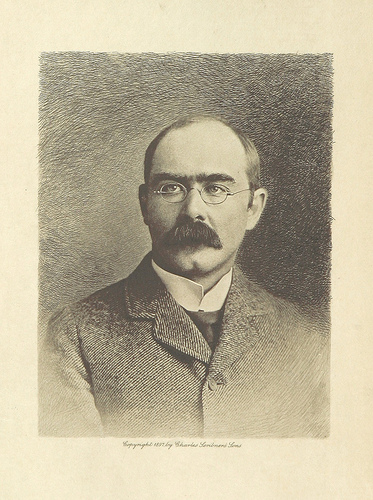
to the middle classes, saturating much of what I read and learned about as a state school kid in the 1950s and 60s, from comics to war stories to ‘great man’ narratives in history. Rudyard Kipling’s awful poem ‘If’ represents it well; to become a man, a boy has to repress his emotions and assert his superiority over others who are to be regarded as fools at the mercy of dangerous irrational passions. This training would ‘armour’ him when he went out to the colonies, and enable him to subordinate his class and ethnic inferiors.

Some of the 1% see the character defects encouraged by public (i.e. private) boarding schools as virtues. Anthony Seldon, Headmaster of Wellington (public) School and co-founder of the neoliberal Institute of Economic Affairs, recommends the practice known at Eton as “’oiling’, which is learning how to win friends and influence others, and how to clamber over them to get what you want. It’s a mixture of ambition, self-confidence and bloody-mindedness . . . ” Seldon acknowledges that this will “nauseate many on the left” [and many others, surely?] and that for many the obsession with character is a “rightwing obsession, redolent of empire and all that is wrong with the class system.”[5] (I couldn’t have put it better myself.) But he is not discouraged in his desire to make a virtue out of a vice, arguing that oiling and the like are necessary for survival in a war of all against all, so the 93% who go to state schools better get over their moral scruples and get used to it, and also acquire the arch confidence that he admires in the public schooled. Though it sounds like self-parody of upper class overconfidence and the arrogance of ignorance, this was not an April 1st article. He was serious.

Combating and undermining the rule of the rich is not only a matter of challenging their domination of politics and economics. It’s also about challenging their idea of ‘character’, their behaviour, and their model of masculinity.


[1] P. Bourdieu, P. and J-P. Passeron, . (1990) Reproduction in Education, Society and Culture, Sage

[2] C. Wright Mills, 1956 [2000] The Power Elite, Oxford University Press, p.14.

[3] See A. Sayer (2005) The Moral Significance of Class, Cambridge University Press, and A. Lareau (2003) Unequal Childhoods, University of California Press

[4] Duffell, Wounded Leaders, pp.46-7

[5] http://www.theguardian.com/commentisfree/2011/sep/02/public-schools-toby-young

Thatcher’s Legacy: The Something-for-Nothing Culture

Photo: Byzantine_K, Creative Commons

Photo: Byzantine_K, Creative Commons

‘The something-for-nothing culture’ is a phrase used by the Right to bash those who live in areas with job shortages, or whose pay does not lift them out of poverty, or who have disabilities and who claim benefits to which they’re legally entitled. It’s a favourite of Iain Duncan-Smith’s – he of the Universal Credit shambles and the bedroom tax. Slandering the poor goes down well not only at Tory Party conferences, but also in newspapers owned by super-rich press barons – i.e. most papers – and, judging by continuing support for the Conservatives, by many of their readers.

It’s a bit rich, not simply because the phrase generally comes out of the mouths of a privileged minority who ooze entitlement from every pore, but because, starting with Margaret Thatcher, neoliberal governments (Tory, New Labour and Condem) have created a something-for-nothing culture of their own for the better off and especially for the rich.

While she preached against inflation, Thatcher’s deregulation of The City fuelled inflation in share and property values, benefitting the better off. Freeing up credit for buying houses inflated their price, as did restricting the creation of new social housing. An increase in the price of assets like houses may make their owners better off on paper in terms of financial wealth – potential claims on goods and services others have produced for sale, but it does not reflect any additional wealth creation, so ultimately the increase must come at the expense of others, including those unable to afford to buy such assets. Sometimes house-owners who benefit from such gains feel a bit guilty about it – quite rightly – though many seem to think it’s a reward for some kind of contribution they’ve made, or a mark of respectability, and hence OK. But it’s something-for-nothing.

As Shelter, the UK charity for the homeless, put it: “If food prices had risen at the same rate as house prices over the last 40 years, a chicken would cost £51.18. Four pints of milk would be £10.45, and a loaf of bread would set you back £4.36. We wouldn’t accept this with food. So why accept it with housing? Unless something changes, a generation will struggle to afford a home of their own.”

And that’s exactly what’s happening. London’s housing market is the most extreme example of the neoliberal something-for-nothing culture. The rich and super-rich are buying up properties merely as financial investments – not to live in and use, but to rent out to others and to enjoy the windfalls in capital gains. Hence it’s improperty.

Similarly with shares: over the last 30 years share prices have risen, not because of economic growth but simply because demand for shares grew with the rise of big institutional ‘investors’, driven by increasing numbers of people taking out private pensions and financial ‘investments’, while the supply of shares was fairly static. Rising share prices in turn drew in more buyers, seeking to enjoy these gains, which only pushed the prices still higher. Buying existing shares in a company just transfers money to those who previously held them; it need not result in any real investment by the company, so shareholders’ dividends and speculative gains were something-for-nothing. Likewise with the privatization of public utilities. Those people who bought the new shares and sold them off to big companies got windfalls. In the process they put public utilities beyond effective public control and handed them over to private companies who took advantage of the monopoly power they afforded and soaked customers.

Photo: Byzantine_K, Creative Commons

Photo: Byzantine_K, Creative Commons

Then there was the great hand-out to the rich in the form of tax cuts and letting tax dodging rip. Thatcher cut the top rate of income tax wfrom 83% to 60%, and increased VAT, which relatively has a bigger impact on low incomes, from 8% to 15%. But that’s not all. Corporation tax has been cut from 52% in 1980 to 21% now. ‘Business-friendly’ means ‘business-compliant’: willing to give business whatever free-ride it wants – or is prepared to pay for in party funding. Remember, at the last election, the Conservative Party got 50% of its funding from the financial sector. Among the important policy changes won by finance lobbyists in Whitehall and Westminster in 2012 were:

  • The slashing of UK corporation tax and taxes on banks’ overseas branches, after a lobbying barrage by the City of London Corporation, the British Bankers’ Association (BBA) and the Association of British Insurers. The reform will save the finance industry billions.
  • The neutering of a national not-for-profit pension scheme launching in October that was supposed to benefit millions of low paid and temporary workers.
  • The killing of government plans for a new corporate super-watchdog to police quoted companies.

UK tax expert Richard Murphy estimates tax avoidance (not illegal[1]) at £25billion and tax evasion (illegal) at £70 billion, or combined £260 million per day; that’s 260 times estimated benefit fraud. Many major multinationals each employ hundreds of lawyers and accountants to work out ever more ingenious ways of avoiding tax. Yet in 2009, the UK’s tax authority, Her Majesty’s Revenue and Customs (HMRC), employed only 600 workers to check the affairs of 700 companies, and only about 100 of those dealt with tax avoidance. In 2011, its budget was cut by £3 billion. But then, back in 2005, Gordon Brown, the Chancellor of the Exchequer had obsequiously reassured the Confederation of British Industry that the government would apply ‘not just a light touch, but a limited touch’ to financial regulation, and to tax too. He went to reassure his audience that he rejected the old assumption that business, unregulated, will invariably act irresponsibly. [Was he just remarkably gullible or bought off?] HMRC were then making job cuts of 25,000. This was completely false economy, for in 2008 its so-called ‘large business service recovered 92 times its costs’, while ‘the “special investigations section” fighting the most complex avoidance cases had yielded 450 times its costs.’

Photo: Mariscat, Creative Commons

Photo: Mariscat, Creative Commons

We’ve seen this kind of thing before:

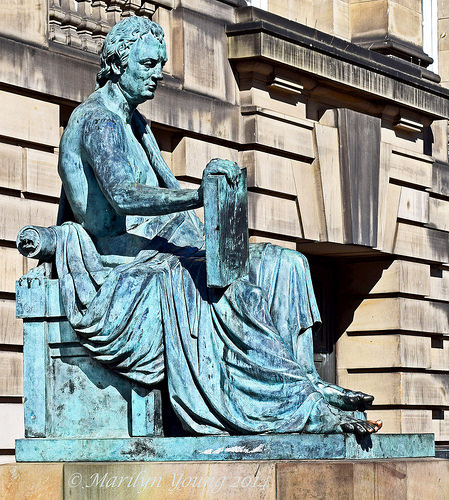
“Where the labourers and artisans are accustomed to work for low wages, and to retain but a small part of the fruits of their labour, it is difficult for them, even in a free government, to better their condition, or conspire among themselves to heighten their wages. But even where they are accustomed to a more plentiful way of life, it is easy for the rich, in an arbitrary government, to conspire against them, and throw the whole burthen of the taxes on their shoulders.”

(David Hume, 1752)

It’s time to throw the ‘something-for-nothing’ tag back at the Tories and their funders and supporters.

[1] To say it’s not illegal, doesn’t necessarily mean it’s legal: it includes avoidance schemes that haven’t yet been assessed in a court of law. (See my book, chapter 16).2014-09-24 15.41.59