The Neoliberal Something-for-Nothing Economy

Photo: Jim Linwood, Creative Commons

Photo: Jim Linwood, Creative Commons

Want to get thousands of pounds for nothing? It’s easy if you own property in the right places.

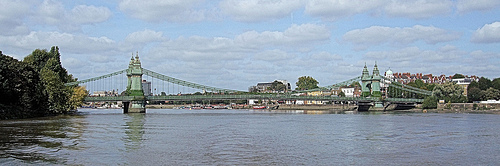
In one in five local authorities, houses in the UK have ‘earned’ more than their owners over the last two years. For them, unearned income has exceeded earned income. Predictably, almost all these places are in the South-east and London. Top of the list is the London Borough of Hammersmith and Fulham, with average house prices rising nearly £200,000 in this period, while the median household earnings in the borough have been £56,698.[1] You may say the owners can only realise these gains if they sell their property, but they can also take advantage of them because higher prices mean more collateral for borrowing to buy more property. And of course most bank lending goes not to productive business for investing, but for buying existing property, particularly housing. Housing in upcoming areas of London is becoming improperty – property bought not for use, but as a source of unearned income – something for nothing – an object of speculative investment.

So what’s the problem? Well, as many noted, such rises in house prices make things all the more difficult for those trying to buy a house first time, and anyone wanting to move into the south from outside. This is true enough, and it is a further indication that young people can increasingly expect to have to rent their homes from private landlords instead of owning it.

Photo: Alan Cleaver, Creative Commons

Photo: Alan Cleaver, Creative Commons

But what the reports missed was the simple injustice of the property windfall as unearned income. Think about those capital gains – for some, the equivalent of a lifetime of free lunches. The only way you can get a free lunch is if someone else produces it for you. Those who gain an extra £200,000 in this way have a claim on £200,000 of goods and services that others produce, and without having to produce any goods and services that didn’t already exist in exchange. If there were nothing to buy with the windfalls, then they would be worthless. Clearly those producers – wherever they may be – have to produce that extra over and above what their own pay (earned income) can buy, to support the unearned income of the rentiers.

So yes, we should worry about first time buyers, but we shouldn’t miss the elephant in the room: unearned income and the rentier economy. The broadsheets, BBC’s Newsnight and the chattering classes love discussing house prices but they seem incapable of noticing this. Could it be because of the massive over-representation of the 1% in the media?

It’s not only unjust: it’s also dysfunctional for the economy, as it’s unproductive. At this time when we urgently need massive investment in the green economy to cut CO2 emissions, and in the construction of new social housing, most bank lending is going to fuelling yet another property bubble in existing housing. Over the last 40 years, debt related to property has risen as a percentage of GDP, and it’s not because people want to buy bigger and better houses but because supply hasn’t kept up with demand, causing land values and house prices to inflate. It’s the kind of inflation neoliberals secretly love, but they keep it hidden by excluding mortgage interest repayments and house prices from the inflation figures. As political economist Colin Hay said, they clearly thought ‘retail inflation bad, house price inflation good’. It’s good for property owners, but at other people’s expense. When politicians and uncritical commentators talk about ‘reviving the housing market’ they mean making sure house price inflation continues, not building more houses.

Diana Parkhouse, Creative Commons

Diana Parkhouse, Creative Commons

Those who seek out such gains may think of themselves as smart, prudent ‘investors’, exactly the kind of people the economy needs, but they couldn’t be more wrong; they are living off others’ work and drawing investment away from productive uses.

George Osborne’s latest budget threatened £12 billion cuts to welfare, but at the same time his giveaways on property enlarge the private welfare state for the rich and comfortably off. ‘Help-to-buy ISAs’ for first-time buyers further fuels demand for housing without increasing the supply. Result?: more windfalls for existing owners.

When will we stop asset-based unearned income?

[1] This is one reason why the ratio of wealth to national income has risen from c.200% in 1940s to over 500% in 2010. An increasing proportion of what we produce is soaked up through the inflation of property values.
2014-09-24 15.41.59

Climate change and the rich

Photo: DonkeyHotey, Creative Commons

Photo: DonkeyHotey, Creative Commons

Everyone may have heard of Bill Gates, the richest person in the world, but not many people know of the Koch Brothers, David and Charles, who have long been in the list of the ten richest people in the US, with a combined ‘net worth’ of over $100 billion in 2014. They own the second biggest company in the US, with business interests ranging from oil (including from tar sands) and gas, to building materials, chemicals, fertilizers and electrical connectors – mostly heavily polluting industries. They clearly have an interest in climate change denial.

The leading climate change denier in Senate, James Inhofe, was funded to the tune of half a million dollars over five years by fossil fuel energy companies, particularly Koch Industries. Obama is reported to have got $884,000 from oil and gas companies in the run-up to the 2008 election. The Koch brothers also fund the lunatic fringe of the Republicans, the Tea Party. Amidst all the noise of the last US election, candidates were eerily silent about climate change. The Kochs are among the funders of the ‘State Policy Network’ – an $83 million network of right wing think tanks across every US state. Now a coalition centred on the brothers is planning to throw $889 million at the 2016 elections. This is plutocracy at its most brazen.

Matching or even outdoing the Koch brothers is Donors Trust – a US right wing organization that helps the rich avoid tax by making charitable gifts. (You may think that’s the wrong way round: shouldn’t charitable giving be an end in itself, not a means for avoiding tax? Well, this is how they put it themselves: “You just received a bonus, inheritance, or trust fund distribution. You need to give to charity to reduce your tax burden but don’t have time right now to figure out where and how much. Open an account at DonorsTrust, immediately receive your full tax deduction, and disburse charitable gifts at your leisure.”) Climate change denial is one of their funders’ most popular causes.

Photo: A Siegel, Creative Commons

Photo: A Siegel, Creative Commons

In the UK, Nigel Lawson, Thatcher’s Chancellor of the Exchequer, has been an energetic denier of anthropogenic climate change, through his Global Warming Policy Foundation. Lawson has refused to name his funders, but they include supporters of the neoliberal thinktank, the Institute of Economic Affairs (itself funded partly by oil and tobacco companies), which also supports climate change denial. Matt Ridley, son of Thatcher’s henchman Nicholas Ridley, and former boss of Northern Rock, whose family estate in Northumberland has a coal mine on it that will generate an estimated £4.1 million every year until 2020, has also joined the deniers. Surprise, surprise.

Philip Mirowski has researched neoliberal think tanks, and argues that – contrary to appearances – neoliberals actually have a strategy for dealing with climate change. It has 3 parts:

First, deny climate change;

Second, advocate carbon markets, in which permissions to emit CO2 can be traded;

Third, invest in ‘geoengineering’ to weaken and reverse global warming and its effects. This might include cloud seeding, adding chemicals to the ocean to stimulate CO2 absorption, or capturing CO2 and storing it underground, putting mirrors in space to reflect back sunlight, and so on.

Photo: John Morgan, Creative Commons

Photo: John Morgan, Creative Commons

This may indeed be the strategy, but as Mirowski points out, it’s madness. Each element of is flawed, though the first two are straightforward bits of deceit. The neoliberals know damn well that global warming is happening and that it’s the result of over two centuries of fossil-fuel burning. But in order to buy time, they deny its existence or say it’s nothing to do with human action, just as tobacco companies knew that smoking was a health hazard and yet denied it so they could continue to profit from it. And attacking scientists, especially where they come up with inconvenient truths, is always a good populist ploy.

Second, they advocate carbon markets because they know they don’t work. The idea is that the government sells permissions to businesses to emit carbon. Those involved in sectors that can reduce their emissions will profit from doing so because they can sell some of their permissions to others who can’t or won’t. By progressively restricting the total number of permissions the government can reduce emissions, and do so in a way that is responsive to the different needs of different businesses. But the business sector can easily prevent it reducing emissions: aside from the sheer political might of major energy companies, they also hold much of the technical information that the regulator needs in order to run the system, so they can protect themselves, and even make profit out of it, especially by constructing derivatives related to the carbon price – another financialization opportunity. Not surprisingly, experiments with such markets in Europe, the US and New Zealand to restrict emissions have failed miserably. But they appeal to mainstream economists, trained to think in terms of economic models rather than real political economic processes, and they are a good way of buying more time for capitalism.

Third, there’s the long-term neoliberal solution of geo-engineering. Technological optimists will always say the history of capitalism has been one of unpredicted inventions and innovations, some of them, like the internet, of vast consequence; so don’t worry, something will turn up. The dangers of creating unwanted side effects by meddling with highly complex and interdependent systems of climate and the ecology, including the chemistry and life of the oceans are huge. Nevertheless, having learnt nothing from over two centuries of imagining we can always dominate nature, there are research projects in progress on geo-engineering, and a feverish scramble for patents on technologies; the profit has to be the main thing, of course. The neoliberal dream is a world whose population is held to ransom by a few geoengineering companies that control the climate.

Some of the projects are funded by billionaires, such as Bill Gates and Richard Branson. Branson, self-publicist and head of the Virgin group of companies, was reported to have

Photo: D@LY3D, Creative Commons

Photo: D@LY3D, Creative Commons

said “If we could come up with a geo-engineering answer to this problem, then Copenhagen [the Climate Change Conference of 2009] wouldn’t be necessary. We could carry on flying our planes and driving our cars”. (Branson, appropriately enough, lives on an island in the Virgin Islands, avoiding UK taxes.) So banking on geo-engineering also encourages complacency about our current fossil-fuel addicted economies and lifestyles. Branson’s imagined world is a bizarre one in which one part of capitalism freely burns still more carbon while another part mitigates its effects, both of them regulated by profit.

Many of the rich are banking on continued fossil fuel extraction – not only by investing in it, but through their dependence on unsustainable growth. As I argue in my book, if we are going to stop global warming we have to take back control of our economies from the rich. And as Naomi Klein notes, the rich also know this, and that’s why people like Nigel Lawson – who says ‘green is the new red’ – are so keen to deny climate change.

Other links on climate change deniers:

http://www.campaigncc.org/climate_change/sceptics/hall_of_shame

http://www.bravenewfilms.org/koch2014

http://corporateeurope.org/sites/default/files/sites/default/files/files/article/funding_climate_deniers.pdf

2014-09-24 15.41.59